
A vanity URL is a short, easy-to-remember web address that sends people to a longer page on your website, such as yourbusiness.co.uk/quote instead of a long link full of folders and codes. It works through a redirect, usually a permanent 301 redirect. Small businesses use vanity URLs on vans, flyers, business cards, radio ads and review requests, because people can read, say and type them without making mistakes.
If you’re asking “what is a vanity URL?”, someone has probably told you to put one on your new flyers or your van, or you’ve spotted one in an advert and wondered how it works. I’m a freelance web designer in London and SEO consultant based in Clapham, and I set these up for clients all the time. On 19 November 2026 I checked everything below against Google’s own guide to redirects (updated 16 November 2026), Google Analytics Help, the GOV.UK rules for short URLs and Google’s Business Profile help pages. Most guides on page one are written by link-shortening companies selling a tool. This one shows you how to do it properly on your own domain, usually for free.
Key takeaways
- A vanity URL is a short, branded address that redirects to a longer page. The best ones sit on your own domain, like yourbusiness.co.uk/van.
- Set it up as a permanent server-side (301) redirect, which Google recommends “whenever possible”.
- Add UTM tags to the destination so Google Analytics shows which flyer, van or advert brought the visit. Without them, most of these visits land in “Direct”.
- A vanity URL gives you no ranking boost on its own. Its job is to be remembered and trusted.
- Google stopped showing Business Profile short names (g.page links) in 2026, and you can no longer create new ones. Your own vanity URL is the safer bet.
What is a vanity URL, in plain English?
A vanity URL is a web address made to be remembered, not just clicked. Behind the scenes it is a redirect: someone types the short address, and the server instantly sends them to the real page. The visitor never has to see or type the long version.
The word “vanity” comes from vanity number plates. Like a private plate, it is a custom version of something that would otherwise be a random string. There are five common types, and they are not equally useful for a small business.
| Type | Example | Who controls it | Good for a small business? |
|---|---|---|---|
| A short path on your own domain | smithplumbing.co.uk/boiler | You | Yes, the best option |
| A separate vanity domain | fixmyboilerclapham.co.uk | You, but it’s another domain to renew | Sometimes, for a big campaign |
| A branded short link | a custom domain on a link-shortening service | Partly the service | Only if you already pay for one |
| A social profile URL | linkedin.com/in/yourname | The platform | Yes, but it’s their address, not yours |
| A Google Business Profile short name | g.page/yourbusiness | No longer available to new businesses |
For most of my clients, the first row is the answer. It costs nothing extra, it shows your real business name, and it keeps working for as long as your website does. If you’re still choosing your main domain, my guide on co.uk or .com helps with that first.
What are some vanity URL examples for a local business?
A good vanity URL example is short, uses real words and points to one specific page. Here is how a few ordinary London businesses could use them, with the long page they replace.
| Business | Where it’s printed or said | Short address | Where it sends people |
|---|---|---|---|
| Plumber | Side of the van | smithplumbing.co.uk/quote | The quote form page, tagged “van” |
| Accountant | Business card | jonesaccounts.co.uk/tax | The self assessment service page |
| Dental clinic | Leaflet through the door | claphamdental.co.uk/whitening | The teeth whitening page, tagged “leaflet” |
| Café | Local radio advert | bluedoorcafe.co.uk/menu | The menu page, tagged “radio” |
| Any local business | Thank-you card or receipt | yourbusiness.co.uk/review | Your Google review link |
The UK government does exactly this. GOV.UK creates short URLs “to share or promote government guidance offline, for example in letters or on posters”, and organisation short URLs look like www.gov.uk/hmrc/information-charter (GOV.UK publishing guidance). If it’s good enough for HMRC’s letters, it’s good enough for your van.
The last row is my favourite. A /review address on your own domain is much easier to print than the long link Google gives you, and you can change where it points later without reprinting anything. My guide on how to get more Google reviews explains where to find that review link.
Vanity URL vs short URL: what’s the difference?
A vanity URL shows your own brand, while a generic short URL shows someone else’s. Both use redirects, but a random short link like a string of letters on a shortener’s domain tells people nothing about where it goes, and that matters for trust.
| Vanity URL on your domain | Generic short link | |
|---|---|---|
| What people see | Your business name and a real word | A shortener’s domain and random characters |
| Trust | High: people know where it goes | Lower: it looks like the links scammers use |
| Easy to say out loud | Yes | No |
| Who owns it | You | The shortening service |
| Analytics | Full UTM tracking in Google Analytics | Google says shorteners “can also strip away referral details” |
| Cost | Free if your site can do redirects | Free or paid, depending on the service |
Government communicators have reached the same conclusion. A UK government communications post on why you shouldn’t use link shorteners points out that “people like to know where they’re going”, that some shorteners add tracking cookies, and that random-looking links are the kind scammers use. For offline campaigns it suggests asking your supplier for an “alias” or “vanity” URL that keeps your domain name intact. That is exactly what a vanity URL on your own website is.
Where should a small business use a vanity URL?
Use a vanity URL anywhere people can’t click: print, signage, vehicles and anything spoken. Online, where people simply tap a link, you rarely need one.
- Vans and vehicle signage. People read it at a junction and type it later, so it must be short and spelled the way it sounds. This is a big one for my trades clients.
- Flyers, leaflets and posters. A different short address per campaign tells you which one worked.
- Business cards and email signatures. Point to your booking or quote page, not just the homepage.
- Radio, podcasts and talks. If people hear it, they must be able to spell it first time.
- Receipts, invoices and thank-you cards. Perfect for a /review address.
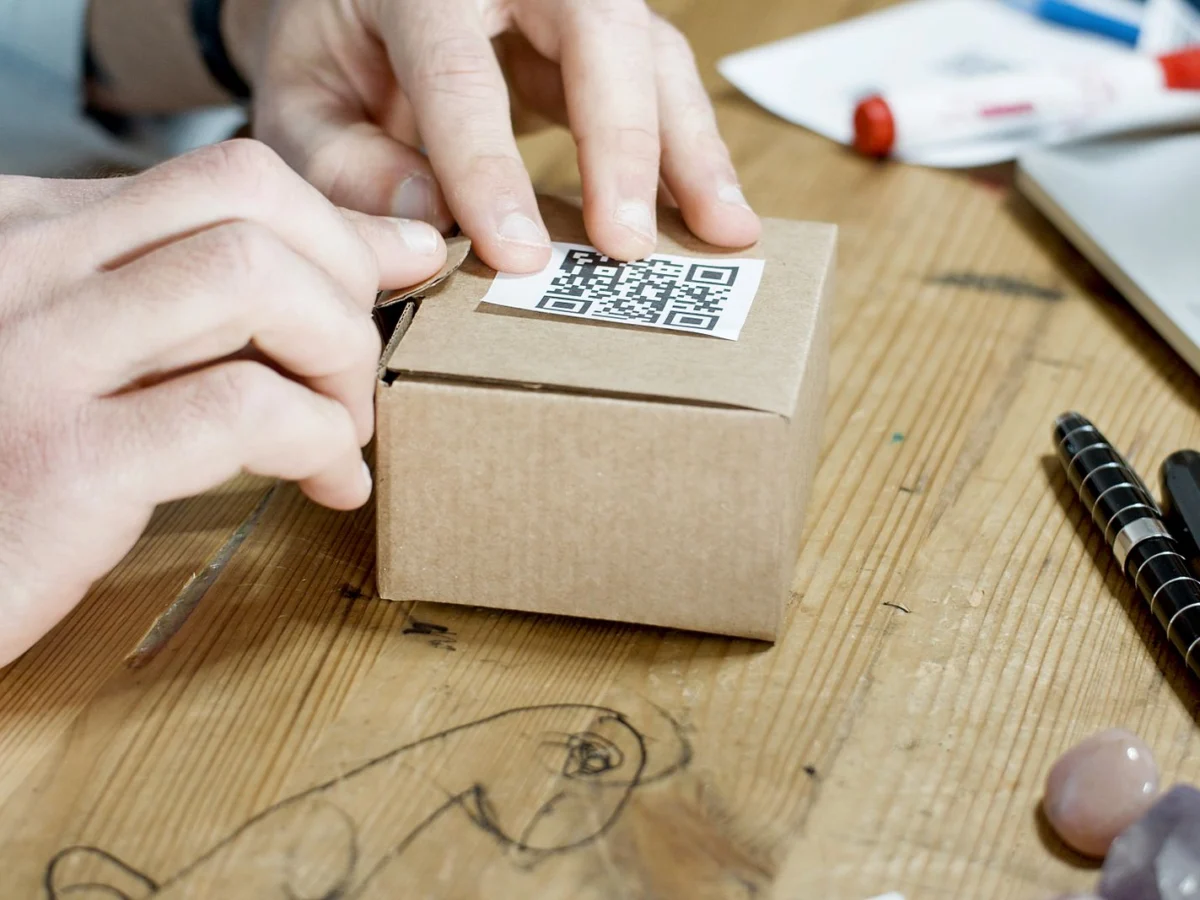
- QR codes. Print the vanity URL under the code, so people who don’t want to scan can still type it.
Getting new vans, flyers or cards printed? I’m a freelance web designer, not an agency, so you deal with me from the first call to launch day. Every website I build can have proper 301 redirects and tracked short addresses set up before anything goes to print. See my web designer in London page or book a free consultation.
How do you set up a vanity URL on your own website?
You create a short address on your domain and redirect it to the real page with a permanent 301 redirect. Google is clear about the method: it recommends “a permanent server-side redirect whenever possible” (Google Search Central, redirects). Here is the order I follow.
- Pick one destination page. A quote form, a service page or a menu, not just the homepage.
- Choose the short word. One or two real words, in lower case, that match the page: /quote, /boiler, /review.
- Check it isn’t already a page. If yourbusiness.co.uk/quote already exists, pick another word or you’ll break it.
- Build the tagged destination. Add UTM tags to the end of the destination link, for example ?utm_source=van&utm_medium=offline&utm_campaign=van-signage (more on this below).
- Create a 301 redirect. Most WordPress SEO plugins and hosting control panels have a redirects section. Avoid JavaScript redirects: Google says “if you set a JavaScript redirect, Google might never see it”.
- Test it on your phone. Type it in exactly as it will be printed, with and without “www”, and check you land on the right page over https.
- Write it down and keep it live. Note every short address and where it’s printed. Vans and leaflets last for years, so never delete the redirect while they’re out there.
If you want a separate vanity domain instead, the setup is the same idea at domain level: the domain points at your hosting and redirects every visit to one page. My guides on domain vs hosting and parked domains explain why a spare domain should always redirect, not sit on a registrar’s holding page.
How do you track a vanity URL in Google Analytics?
You track it by adding UTM tags to the page the vanity URL redirects to, not to the vanity URL itself. That way the printed address stays short, and Google Analytics still knows the visit came from your van or leaflet.
Google’s rule is simple: “When you add parameters to a URL, you should always use utm_source, utm_medium, and utm_campaign.” It also warns that “Parameter values are case sensitive”, so “Van” and “van” show up as two different sources (Google Analytics Help, URL builders). Pick lower case and stick to it.
Skip the tags and most of these visits will show as “(direct) / (none)”. Google lists the usual causes, including links without UTM parameters, redirects from secure to non-secure pages that “strip UTM parameters from the URL”, and URL shorteners that “can also strip away referral details” (Google Analytics Help, direct traffic). I cover this in more depth in what is direct traffic in Google Analytics.
Do vanity URLs help SEO?
No, a vanity URL doesn’t push your website up Google on its own. It’s a marketing tool for people, not a ranking trick. Set up properly, it does no harm either, because Google simply follows the redirect to your real page.
Google explains that with a permanent redirect “the indexing pipeline uses the redirect as a signal that the redirect target should be canonical”. In plain English, Google treats your real page as the one to show in search results, and the short address doesn’t compete with it. A temporary (302) redirect works the other way: Google may show the source URL instead, which is why I use 301s for vanity URLs that are meant to last.
What you must avoid is the deceptive kind. Google’s spam policies define sneaky redirecting as doing it “maliciously” to show users or search engines something different, or “unexpected content that doesn’t fulfill their original needs” (Google spam policies). A /boiler address that lands on your boiler page is the opposite of that. And buying lots of keyword domains to redirect for rankings is a waste of money, as I explain in what is a microsite.
What happened to Google Business Profile short names?
Google used to let businesses create a free vanity URL for their profile, such as g.page/yourbusiness. That feature has gone: Google’s help page now says “You can no longer create or edit short names.”
According to the same page, short names and URLs that already exist “will still work”, but they “will no longer be shown on the Business Profile to customers”. There is a trap too: “Once you delete your existing short name, you can’t create it again” (Google Business Profile Help). Search Engine Roundtable reported Google’s announcement on 11 February 2026.
So if you printed a g.page link years ago, leave it alone and don’t delete it. For anything new, use a short address on your own domain that redirects to your profile or review link. You stay in control even if Google changes its features again. If you’re new to profiles, start with what a Google Business Profile is.
How do you choose a good vanity URL?

Choose something a stranger could hear once and type correctly. That rules out numbers, odd spellings and anything that needs explaining.
- Short and real. /quote beats /get-a-free-quote-today.
- Lower case only. Most people don’t bother with capitals when they type, so don’t make them.
- No dashes if it’s spoken. GOV.UK’s rule: if the URL is read aloud, avoid dashes; if it’s only written, you can include them.
- One per campaign. GOV.UK notes that tracking several UTM combinations, such as print and radio, needs multiple short URLs. Same for you.
- Match the destination. /menu should open the menu, not the homepage.
Are vanity URLs safe for your customers?
Yes, and they are safer-looking than the alternatives. A vanity URL shows your own domain, so customers can see it’s really you before they visit.
The UK’s National Cyber Security Centre notes that people are “cautious of clicking on shortened links”, which is why criminals have started hiding malicious links behind QR codes instead (NCSC, QR codes: what’s the real risk?). That’s a good reason to print your short web address next to every QR code. A customer who sees yourbusiness.co.uk/menu under the code knows exactly where it goes.
Which situation are you in?
| Your situation | What I’d do |
|---|---|
| Getting a van signwritten or flyers printed | Set up a tagged 301 redirect on your own domain first, then print it |
| Your website can’t do redirects | Ask your web designer or host; most WordPress sites can do this in minutes |
| You use a free short link on everything | Switch new print to your own domain; keep old short links working |
| You have an old g.page short name in print | Leave it alone, don’t delete it, and use your own domain for new material |
| You bought a keyword domain hoping to rank | Redirect it to your main site with a 301, and don’t expect an SEO boost |
| You can’t tell which leaflet worked | Give each campaign its own short address with its own UTM tags |
| You’re getting a new website anyway | Ask for redirects and short campaign addresses to be included before launch |
You can do all of this yourself if your site has a redirects tool and you’re comfortable with UTM tags. It’s worth getting help when you’re launching a new site, moving domains or running several campaigns at once, because one wrong redirect on printed material is expensive to fix. A new website with me costs £1,500 for up to 5 pages or £2,500 for up to 15 pages (see pricing). I don’t edit websites someone else built, but I do run monthly local SEO in London on existing sites, from £495 a month, with call tracking on the Local Growth plan.
Vanity URL FAQs
What is a vanity URL in simple terms?
A vanity URL is a short, memorable web address that redirects to a longer page, such as yourbusiness.co.uk/quote. It is made for people to read, say and type, especially on print, vans and adverts.
What is the difference between a vanity URL and a short URL?
A vanity URL uses your own brand or domain, while a generic short URL uses a shortening service’s domain and random characters. Both redirect, but a vanity URL tells people where they are going, which builds trust.
Is a vanity URL good for SEO?
It doesn’t improve rankings on its own. If you use a permanent 301 redirect, Google treats the destination page as the one to show in search, so the vanity URL causes no harm either.
Should a vanity URL use a 301 or 302 redirect?
Use a 301 permanent redirect for a vanity URL you plan to keep. Google recommends permanent server-side redirects whenever possible and says temporary redirects show the source page in search results.
How do I track visits from a vanity URL?
Add utm_source, utm_medium and utm_campaign tags to the destination page the vanity URL redirects to. Google Analytics will then show the visits under that source and campaign instead of Direct.
Can I still get a g.page short name for my Google Business Profile?
No. Google’s help page says you can no longer create or edit short names. Existing ones still work but are no longer shown on profiles, so use a vanity URL on your own domain instead.
Want vanity URLs that work from day one?
Now you know what a vanity URL is, how to set one up with a 301 redirect and how to track every van, flyer and card. If you’d rather not touch redirects at all, tell me about your business. I’ll build you a bespoke website with the redirects and tracking ready before anything goes to print. See what’s included on my web designer in London page.
Book a free consultation, or call or WhatsApp me on 07404 145722. No jargon, and no broken links on your van.

Freelance web designer and SEO in Clapham, London, and two-time Prestige Awards Web Designer of the Year. I design, build and rank websites for small businesses. More about me